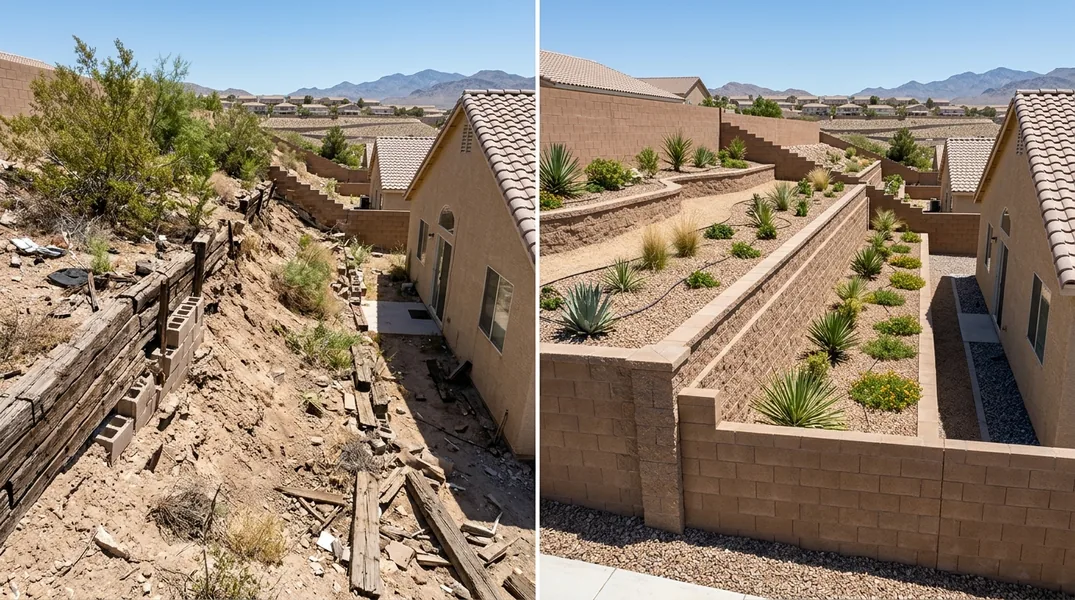
Understanding Hydrostatic Pressure and Retaining Wall Failure
When monsoon season arrives in Las Vegas, homeowners face a challenge that many don't anticipate: the destructive force of water pressure building up behind retaining walls. This phenomenon, known as hydrostatic pressure, occurs when water becomes trapped against the wall and has nowhere to drain. As water accumulates, the pressure increases exponentially, pushing against the wall with tremendous force. Even a well-constructed wall can fail if it lacks proper drainage infrastructure to handle the volume of water that monsoons deliver.
The problem is particularly acute in Las Vegas because our desert climate means the ground is typically dry and compacted. When heavy rainfall suddenly occurs, the soil cannot absorb water quickly enough. Instead, water pools behind retaining walls, creating conditions that lead to structural failure, cracking, bowing, and in severe cases, complete collapse. Homeowners who invested thousands of dollars in Retaining Wall Installation without adequate drainage solutions often discover too late that their walls are vulnerable to monsoon damage.
How Monsoon Flash Floods Impact Retaining Walls
Monsoon flash floods in Las Vegas can deliver intense rainfall in a very short time period. Unlike gentle, steady rains that allow water to percolate into the soil gradually, flash floods create an overwhelming volume of water that must go somewhere immediately. When this water encounters a retaining wall, it doesn't simply run around it. Instead, water gets trapped behind the wall, and if there's no drainage system in place, the hydrostatic pressure builds rapidly. This pressure acts like an invisible hand pushing against the wall from behind, and the longer the water remains trapped, the stronger that force becomes.
The consequences of inadequate drainage during monsoon events can be catastrophic. Walls that appeared solid and secure for years can suddenly show signs of distress: horizontal cracks near the base, visible bowing or tilting, seepage through the concrete, or chunks of material breaking away. In extreme cases, the entire wall can fail, potentially causing property damage, erosion of retained soil, and safety hazards for anyone nearby. The financial impact of a retaining wall failure often far exceeds the cost of installing proper drainage from the start, making preventive measures an essential investment for any property owner in the Las Vegas area.
The Critical Role of Retaining Wall Drainage Systems
Proper retaining wall drainage is the foundation of wall longevity and safety. A well-designed drainage system manages water in multiple ways: it intercepts water before it reaches the wall, it provides pathways for water to flow away from the wall safely, and it prevents water from accumulating in the soil behind the wall. Without these systems, even the strongest wall materials will eventually fail under the relentless pressure of trapped water. The most effective drainage solutions combine multiple techniques, including gravel backfill, perforated pipes, and surface-level water management.
The most common and effective drainage solution is the retaining wall french drain. This system consists of a perforated pipe installed at the base of the wall, surrounded by gravel. The perforations allow water to enter the pipe, which then directs that water away from the wall and toward a safe discharge point. French drains are particularly valuable in Las Vegas because they handle both the occasional monsoon deluge and the gradual moisture that can accumulate from landscape irrigation or poor grading. When installed correctly during Retaining Wall Installation, a french drain system can protect your investment for decades.
Retaining Wall Drainage Solutions for Las Vegas Properties
Installing effective drainage doesn't require exotic or overly complicated solutions. The key is understanding your property's water flow patterns and ensuring that water is directed away from the wall. Proper grading is essential: the ground should slope away from the wall so that surface water naturally flows downhill and away from the structure. Additionally, the soil immediately behind the wall should be backfilled with free-draining material, typically a coarse gravel or engineered backfill, rather than dense clay or compacted native soil that traps water.
For properties in Henderson and surrounding areas, landscape drainage can also include surface swales, which are shallow channels that guide water away from the wall. Installing gutters and downspouts that direct roof runoff away from the wall is another practical step. In some cases, especially on properties with significant slopes or complex drainage challenges, a combination of these solutions may be necessary. The investment in proper drainage during installation is far less expensive than addressing failures later through Retaining Wall Repair or Retaining Wall Replacement.
Signs Your Retaining Wall May Have Drainage Problems
Every homeowner should know the warning signs that indicate a retaining wall is experiencing drainage issues. The most obvious sign is visible water seeping or weeping through the wall surface, which indicates that water is trapped behind the wall and finding its way through cracks or pores in the material. Other warning signs include horizontal cracks, especially near the base of the wall, or cracks that appear to follow a stair-step pattern. Bowing or tilting of the wall, where the top of the wall leans away from the retained soil, is a serious indicator of excessive pressure building up behind the wall.
Soil erosion at the base of the wall, soft or soggy ground behind the wall, or unusual vegetation growth (which thrives in moist conditions) also suggest drainage problems. If you notice any of these signs, especially during or after monsoon season, it's important to have a professional evaluate your wall. What may seem like a minor issue now could develop into a major structural failure if left unaddressed. Contacting Las Vegas Retaining Wall at (725) 726-4860 for a professional assessment can help you understand whether your wall needs drainage improvements or repairs.
When to Call a Professional for Drainage Repair Near Me
Attempting to address retaining wall drainage problems without professional expertise can lead to incomplete solutions that fail to solve the underlying issue. A qualified contractor will assess your property's topography, soil composition, water flow patterns, and the condition of your existing wall to recommend appropriate solutions. This might involve installing new drainage systems, improving grading, adding or replacing backfill material, or in some cases, recommending Concrete Retaining Walls with integrated drainage features.
Las Vegas Retaining Wall specializes in diagnosing and solving drainage problems that threaten the integrity of retaining walls throughout the Las Vegas area. Our team understands the unique challenges posed by monsoon flash floods and the desert's compacted soils. Whether you need preventive drainage installation during a new wall project or you're dealing with an existing wall that shows signs of drainage failure, we can provide expert guidance. Contact us at (725) 726-4860 or request a free estimate to discuss your specific situation and learn what drainage solutions are right for your property.
Looking for a professional retaining wall contractor in Las Vegas? Las Vegas Retaining Wall responds fast for all your retaining wall needs.
Get a Free QuoteOur services: Retaining Wall Installation · Retaining Wall Repair · Retaining Wall Replacement